by Victor Bohman Lind, self-certified HPC expert
1. Introduction: The Microcosm of Local Governance
Within the multi-tiered architecture of English local democracy, the parish or town council represents the most granular, hyper-local echelon of civic administration. Governed historically by the Local Government Act 1894 and operating under contemporary statutes such as the Local Government Act 1972, these councils possess limited but highly visible statutory powers. Their remits primarily encompass local environmental maintenance, the provision of community grants, the management of allotments and public spaces, and the exercising of advisory roles in local planning applications. In theory, parish councils function as the bedrock of community representation, designed to operate sedately, strictly within procedural bounds, and predominantly by local consensus. However, the tenure of the Handforth Parish Council from 2019 to 2023 starkly and aggressively deviated from this administrative ideal.
Handforth, a town and civil parish located in the unitary authority of Cheshire East, encompasses a mix of historic settlements and post-war residential expansion, registering a population of approximately 6,715 residents in the 2021 census. Having been abolished in 1936, the parish council was re-established in 2011 to provide residents with direct, localized oversight over their amenities. Instead, the 2019–2023 session devolved into a labyrinthine saga of factional warfare, procedural paralysis, and bitter personal animosity. This dysfunction culminated in an internationally viral virtual meeting in December 2020, resulting in extensive formal legal investigations, significant taxpayer expense, and the eventual dissolution of the ”parish” title itself as an act of institutional rebranding.
This report provides an exhaustive, academic analysis of the 2019–2023 Handforth Parish Council. It chronicles the historical and electoral foundations of the council’s factional split, the procedural warfare regarding statutory councillor disqualifications, the catastrophic breakdown of employment relations, the infamous virtual meetings of December 2020, the subsequent psychological and financial fallout, and the institutional reconstruction that ultimately led to the stabilizing May 2023 elections.
2. Historical Context and the Electoral Foundation of Division
To comprehend the administrative paralysis that defined the Handforth Parish Council, one must first examine the historical context of the settlement and the electoral results of the May 2019 local elections. The council was composed of multiple wards, requiring the election of representatives who, theoretically, would operate independently of national political party affiliations, focusing solely on local betterment.
2.1 The Historical Development of Handforth
Handforth’s origins reveal a historically modest settlement. Absent as a distinct entry in the Domesday Book of 1086, the area was likely subsumed under broader holdings in the Macclesfield Hundred. Verifiable records date back to a 1291 deed detailing a water mill transfer, with the manor subsequently dominated by the de Honford family. The population remained sparse until the late 19th and mid-20th centuries, when post-World War II reconstruction and regional migration drove suburban expansion, leading to the development of overspill housing estates such as Spath Lane and Knowle Park.
Administratively, Handforth functioned as an urban district council until 1936, when it was abolished and split between neighboring jurisdictions. It was not until May 2011 that Handforth was re-established as an independent civil parish, carved out from portions of the former Wilmslow parish to reflect a distinct local identity. However, almost immediately upon its re-establishment, the council became a battleground for competing local ideologies. Accusations of conflicts of interest became commonplace, with early projects—such as green belt development, war memorial construction, and CCTV installation—frequently blocked amid deep ideological divides between rival local groups.
2.2 The 2019 Electoral Landscape
The May 2019 local elections crystallized these historical divisions into a deadlocked administrative body. The election returned candidates predominantly running as ”Independents” or under local slate banners, specifically the ”Handforth Ratepayers’ Association” and ”Improving Handforth”. The results established a deeply fragmented council, lacking a unified majority capable of governing by consensus.
| Ward | Nominated Candidate | Political Description | Votes Cast | Elected |
| East Ward | Cynthia Margaret Samson | Improving Handforth / Ind. | Unopposed | Yes |
| East Ward | John Michael Smith | Improving Handforth / Ind. | Unopposed | Yes |
| South Ward | Barry Edward Burkhill | Handforth Ratepayers’ Assoc. | 316 | Yes |
| South Ward | Brian Victor Tolver | Independent / Ratepayers | 271 | Yes |
| South Ward | Andrew Backhouse | Independent | 239 | No |
| South Ward | Roger Clive Small | Independent | 228 | No |
| West Ward | Susan Elizabeth Moore | Independent | 451 | Yes |
| West Ward | Jean Thompson | Independent | 369 | Yes |
| West Ward | Aled Brewerton | Independent | 353 | Yes |
| West Ward | Michael Keith Thompson | Independent | 294 | No |
| West Ward | Lee Robert Nelson | Independent | 263 | No |
| West Ward | Timothy Hardy | Independent | 218 | No |
| West Ward | Chris Fortune | Liberal Democrat | 182 | No |
The electoral data indicates profound voter apathy combined with highly polarized voting blocs. The West Ward registered a mere 23.92% turnout, while the South Ward saw 42.60%. More critically, the election resulted in a razor-thin balance of power. Following the election, a bloc formed around the newly appointed Chairman, Brian Tolver, and his Ratepayers’ Association colleague, Barry Burkhill. They were joined by Aled Brewerton and Jean Thompson, two newly elected independents from the West Ward, creating a fragile 4-3 majority.
Opposing them were Councillors Cynthia Samson and John Smith, both aligned with the ”Improving Handforth” platform, alongside Susan Moore from the West Ward. The ideological differences between these two factions were historically fractious, preventing any semblance of cooperative governance. This slim majority meant that the administrative machinery of the council was constantly on a knife-edge; the absence, defection, or disqualification of a single councillor could entirely shift the council’s control and instigate procedural warfare.
3. Statutory Triggers and Administrative Paralysis (2019–2020)
The fragile 4-3 dynamic fractured entirely in mid-2020. The catalyst was not a dispute over local policy, but the rigid application of English local government attendance laws, which precipitated a full collapse of administrative relations.
3.1 The Section 85 Disqualification of Jean Thompson
The mechanism of the council’s collapse was Section 85 of the Local Government Act 1972. Under Section 85(1), if a member of a local authority fails throughout a period of six consecutive months from the date of their last attendance to attend any meeting of the authority, they automatically cease to be a member, unless the failure was due to a reason approved by the authority before the expiry of that period.
Councillor Jean Thompson missed all council meetings starting in December 2019. As the six-month deadline passed amid the onset of the COVID-19 pandemic, a casual vacancy was legally triggered in the West Ward. The disqualification under Section 85 is absolute; once a member loses office through failure to attend, the disqualification cannot be overturned by subsequently resuming attendance, nor can retrospective approval be granted by the council.
This automatic statutory disqualification immediately reduced the Tolver-aligned bloc to three members, tying the council at a 3-3 deadlock. Unwilling to accept the loss of their working majority, Councillors Tolver, Brewerton, and Burkhill fiercely contested the disqualification. They demanded that the Parish Clerk, Ashley Comiskey Dawson, unilaterally reinstate Thompson to her position.
However, the Clerk, acting as the Proper Officer, sought explicit legal guidance from the Cheshire East Council Democratic Services. The principal authority confirmed that the vacancy was legally binding and instructed Comiskey Dawson that reinstating the disqualified councillor would be an unlawful act. Chairman Tolver publicly rejected this guidance, arguing during an extraordinary meeting in August 2020 that the disqualification was invalid. Tolver relied on convoluted legal interpretations, specifically citing Northern Irish case law (Neeson and Hogan), to argue that time runs from a member’s last attendance, not absence, and attempted to push the council to simply resolve that no vacancy existed. The Clerk maintained that no legal power could halt the electoral process once the Returning Officer received formal Notice of Vacancy.
3.2 The Weaponization of the Employment Committee
Frustrated by the loss of their majority and the Clerk’s refusal to violate statutory law, the Tolver faction leveraged the council’s sub-committees to apply pressure. The relationship between the Chair and the Clerk irreparably broke down. According to statements later placed on the public record by Councillor John Smith, an internal email was circulated in error by the Tolver faction containing the query: ”How can we get rid of Ashley? Can we get a solicitor who specialises in employment law to get rid of Ashley so that they could bring this councillor back?”.
This hostility culminated on November 4, 2020, at a meeting of the council’s Employment Committee. Dominated by Tolver, Brewerton, and Burkhill, the committee formally suspended Clerk Ashley Comiskey Dawson without seeking the full council’s prior consensus. Councillor Burkhill later justified this by citing ”the seriousness of the concerns about the actions of the clerk and the fact that relationships had broken down”.
The suspension of the sole administrative officer incapacitated the daily operations of the council. Routine business, the progression of neighborhood planning, and the legal publishing of agendas ground to a halt. Consequently, Chairman Tolver refused to call further full council meetings, effectively rendering the democratic body completely inert.
4. The Crucible: The December 2020 Virtual Meetings
With the Clerk suspended and the Chairman deliberately preventing the council from convening, the opposing bloc (Councillors Smith, Samson, and Moore) sought alternative legal avenues to break the deadlock. They utilized Schedule 12 of the Local Government Act 1972, which stipulates that if a Chairman refuses to call a meeting within seven days of a requisition presented by two members of the parish council, those members may convene an ’extraordinary meeting’ themselves.
Because the parish lacked an acting Clerk to manage the logistical and technical requirements of a virtual meeting—which were mandated under the Local Authorities and Police and Crime Panels (Coronavirus) (Flexibility of Local Authority Meetings) (England) Regulations 2020—the requisitioning councillors requested external assistance. They approached the Cheshire Association of Local Councils (ChALC), and Jackie Weaver, Chief Officer of ChALC, agreed to facilitate the meeting and act in a clerking capacity.
4.1 The Planning and Environment Committee Altercation
On the evening of December 10, 2020, two consecutive Zoom meetings were scheduled: the Planning and Environment Committee, immediately followed by the Extraordinary Full Council Meeting.
Before the first meeting could officially commence, the virtual environment descended into anarchy. Chairman Brian Tolver attended with the explicit, pre-meditated intention of halting the proceedings. He aggressively asserted that the meeting was an illegal assembly, arguing that Weaver held no status as the ”Proper Officer” and therefore the meeting lacked legitimacy. Weaver countered that she was present purely in a facilitative capacity to clerk a meeting that had been lawfully requisitioned by two councillors, and that a formal Proper Officer was not legally required for the meeting to proceed.
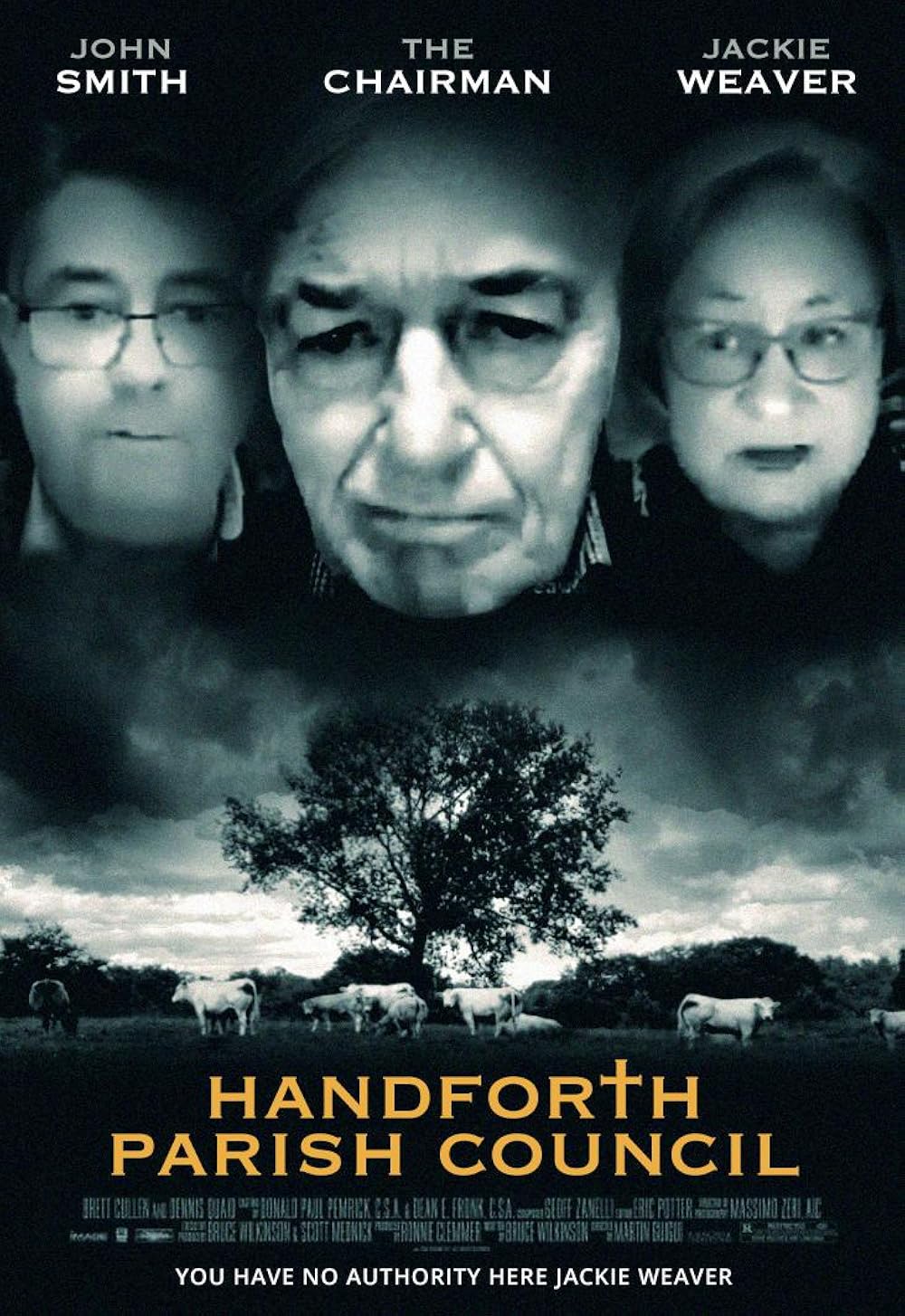
The confrontation rapidly escalated as Tolver attempted to dictate the rules of engagement. In a moment that would soon become culturally ubiquitous, Tolver aggressively informed Weaver: ”You have no authority here, Jackie Weaver. No authority at all”. In response to this disruption, and aiming to allow the lawfully convened meeting to proceed, Weaver utilized her Zoom host controls to unilaterally remove Tolver, placing him into a virtual waiting room.
The summary removal of the Chairman triggered explosive fury from Vice-Chair Aled Brewerton, who was logged into the meeting under the display name ”Aled’s iPad”. Operating under the assumption that the removal of the Chair automatically and legally elevated him to the position of meeting controller, Brewerton demanded that he take charge. Leaning aggressively into his camera, he shouted at Weaver: ”Read the standing orders! Read them and understand them!”. Concurrently, Councillor Barry Burkhill began protesting the expulsions. Facing compounding disruption, Weaver decisively placed both Brewerton and Burkhill into the virtual waiting room alongside Tolver.
4.2 The Reconstitution of the Proxy Council
With the disruptive Ratepayers faction removed from the virtual space, the remaining three councillors—John Smith, Cynthia Samson, and Susan Moore—proceeded with the agenda. Councillor John Smith was formally elected as the proxy chair for the session.
During the subsequent extraordinary full council meeting, the reconstituted body systematically dismantled the administrative roadblocks erected by the Tolver faction. The proxy council passed resolutions to officially dissolve the Employment Committee that had been weaponized against the Clerk, rescinded the exclusionary motions passed by Tolver’s bloc, and formally initiated the process to lift the suspension of Ashley Comiskey Dawson.
5. Viral Dissemination and Societal Reaction
For nearly two months, the unprecedented events of December 10 remained a highly localized administrative dispute. However, the requirement that local authorities record and publish their virtual meetings during the pandemic created a digital footprint that would soon escape the confines of Cheshire East.
5.1 The Memeification of Local Governance
On February 4, 2021, a 17-year-old local government enthusiast and politics student from East London, Shaan Ali, discovered the uploaded Zoom footage on YouTube. Fascinated by the intense vitriol over granular municipal issues, he shared a condensed 30-second clip of the altercation on Twitter.
The dissemination was explosive. Retweeted by prominent media figures including Piers Morgan and Richard Osman, the clip accumulated over six million views within days. The stark juxtaposition of mundane bureaucratic proceduralism with explosive anger resonated deeply with a British public suffering from the psychological fatigue of the third national COVID-19 lockdown. The incident was described by The Washington Post as resembling an ”absurdist British play,” highlighting the unexpected drama of a sector traditionally viewed as sedate.
Jackie Weaver was immediately elevated to the status of an unlikely cultural icon. She was celebrated for her apparent stoicism in the face of what academic commentators and media outlets identified as systemic misogyny, male entitlement, and petty local tyranny. Her catchphrase, ”You have no authority here,” and Brewerton’s ”Read the standing orders,” were rapidly commodified into internet memes and physical merchandise. Weaver’s newfound celebrity led to appearances on BBC Radio 4’s Woman’s Hour, Channel 4’s The Last Leg, and even inspired a tribute song composed by Andrew Lloyd Webber, who hailed her as ”the role model we all strive to be”.
5.2 The Psychological Toll on the Councillors
While Weaver was universally lauded, the viral fame proved catastrophic for the councillors involved, illustrating the destructive potential of digital vigilantism when applied to unpaid local volunteers.
Aled Brewerton and his father, Keith Brewerton, reported becoming targets of severe public harassment following the dissemination of the video. Aled Brewerton disclosed that he received death threats and that his home address was maliciously shared across social media platforms. The psychological toll was profound; Brewerton stated he suffered from extreme anxiety, felt unsafe visiting local public houses, and noted that the town was being mockingly referred to nationally as the ”Handforth Clown Council”.
In an attempt to regain control over their privacy, Keith Brewerton filed formal complaints with the Information Commissioner’s Office (ICO), arguing that the publication of the video violated privacy laws because they were recorded inside their homes. The ICO closed the case without taking further action. Brewerton also submitted multiple complaints to the Independent Press Standards Organisation (IPSO) against publications such as the Mirror and Express, alleging harassment, clandestine recording, and misleading editing. IPSO systematically dismissed these complaints, ruling that the press was reporting on a matter of clear public interest.
6. Formal Investigations and Financial Fallout
The viral embarrassment and the complete breakdown of administrative functions triggered a massive intervention by the monitoring officer at the principal authority, Cheshire East Council. It was subsequently revealed that between 2018 and late 2020, Cheshire East had already received 21 formal complaints regarding Handforth, but the volume surged exponentially following the global media attention.
6.1 The Bevan Brittan Reports
Recognizing the complexity and toxicity of the situation, Cheshire East Council’s monitoring officer commissioned the external legal firm Bevan Brittan to conduct an independent, comprehensive investigation into the multiplicity of member complaints.
The investigative process generated six extensive reports, comprising over 1,000 pages of evidence and appendices. The financial burden of this external investigation was staggering, costing the local taxpayer £85,716—an amount that exceeded the parish council’s entire annual precept.
The findings of the six reports, formally published by the Audit & Governance Committee in March 2022, were highly critical of the faction led by Tolver:
- Code of Conduct Breaches: The reports concluded that Brian Tolver, Aled Brewerton, and Barry Burkhill had potentially conducted themselves in breach of multiple provisions of the Members’ Code of Conduct, specifically regarding Objectivity, Openness, Leadership, and Respect for others.
- Vexatious Threats and Litigation: The investigation highlighted that elements of the council had engaged in continuous threats of legal action against the Chief Executive of Cheshire East in their role as Returning Officer. These threats prevented informal resolutions regarding the casual vacancy and incurred significant, unwarranted public costs.
- Baseless Financial Allegations: Allegations made by one councillor regarding severe financial impropriety were investigated in coordination with the police and external auditors. The investigators established that there was ”no foundation whatsoever” to these allegations, noting they served only to maliciously delay proceedings.
Conversely, the third investigation report reviewed complaints levied against Councillors Smith, Samson, and Moore by the Tolver faction. The investigators dismissed these claims entirely, finding no breaches of the Code of Conduct relating to Objectivity, Leadership, Respect, or Bullying on their part.
6.2 The Legal Ruling on Jackie Weaver’s Authority
Perhaps the most legally nuanced and ironic finding of the Bevan Brittan reports concerned the actions of Jackie Weaver. The investigation concluded that, strictly speaking, Brian Tolver was procedurally correct: Jackie Weaver did not possess the formal statutory authority to mute or eject elected members from the meeting.
The report explicitly stated: ”We find that JW was not acting in an official capacity at the meetings. She did not have authority to manage the attendance at those meetings (which she fully accepts)”.
However, the investigators immediately contextualized this legal technicality by acknowledging the extreme provocation Weaver faced. The report recognized that Tolver had attended the meeting with the sole, pre-meditated intent of shutting it down before democratic business could be conducted. Had Tolver been permitted to raise a motion declaring the meeting unlawful, it likely would have passed due to his faction’s presence, thwarting the requisition. The report concluded: ”Faced with what were unusual and difficult circumstances, and the deep-seated issues underpinning those circumstances, we can understand why Jackie Weaver acted as she did, despite her action being without any formal footing in terms of appropriate process and procedure”.
The three cited councillors fiercely rejected the findings. Releasing a joint statement, Tolver, Brewerton, and Burkhill declared the investigation to be ”extreme fiction” conducted with an ”air of mendacity,” and vowed to contest the findings. However, because all three men resigned from the council prior to the formal Sub-Committee adjudication hearings, no official punitive sanctions could be formally enacted against them.
7. Institutional Reconstruction and Rebranding (2021–2022)
The structural integrity of the Handforth Parish Council had been utterly compromised. Recognizing that the council could not function under the intense media glare and the weight of its own recent history, a period of rapid institutional reconstruction commenced in mid-2021.
7.1 Resignations and the Restoration of Consensus
The Tolver faction collapsed shortly after the viral incident, paving the way for a return to administrative normalcy:
- Aled Brewerton formally resigned his seat in April 2021, citing the severe toll the public harassment had taken on his mental and physical health.
- Brian Tolver stepped down as Chairman in April 2021 during a highly-watched live-streamed meeting, though he initially attempted to remain as a backbench councillor. As internal pressure mounted, he formally resigned from the council entirely in October 2021.
- Barry Burkhill, who simultaneously served as the Mayor of Cheshire East, faced immense political pressure. A vote of no confidence in his mayoral position was initiated by Conservative councillors due to his complicity in the bullying at Handforth. While he narrowly survived to serve out his mayoral term until May 2021, he resigned from the Handforth Parish Council that same month, citing a desire to distance himself and focus on his Cheshire East duties.
These resignations permanently broke the deadlock. The remaining councillors—Smith, Samson, and Moore—were able to co-opt new, reform-minded members (including Peter Moore, Roger Small, and Tim Royle) to fill the casual vacancies. This restored a functional, unified majority focused on civic duties rather than interpersonal warfare.
7.2 Rebranding to Handforth Town Council
In November 2021, under the new chairmanship of John Smith, the council made a highly symbolic administrative decision: it voted to formally change its statutory name from Handforth Parish Council to Handforth Town Council.
The rationale provided by Councillor Smith was twofold. First, it was a deliberate, strategic attempt to legally and optically distance the civic body from the ”toxic, viral” reputation that the phrase ”Parish Council” now evoked in global search engines and public consciousness. Second, Smith noted that a modern, growing settlement like Handforth was better served by the term ”Town Council,” helping to dispel the common public misconception that the council was an ecclesiastical body tied to the local church, akin to the television show The Vicar of Dibley. To symbolically mark this institutional rebirth, Jackie Weaver was invited back to Handforth as a guest of honor to officially switch on the town’s Christmas lights in November 2021.
7.3 The Cheshire East Community Governance Review
Simultaneous to the internal rebuilding of Handforth, Cheshire East Council undertook a comprehensive, borough-wide Community Governance Review between 2019 and 2022. This exhaustive statutory process evaluated town and parish boundaries, electorate ratios, and warding arrangements across the unitary authority to ensure they accurately reflected evolving community identities.
During the consultation phase, which garnered over 4,800 responses, proposals were floated that could have seen Handforth abolished or merged with neighboring Wilmslow or Styal. However, the review ultimately recognized the distinct identity of the area and preserved Handforth Town Council’s independence. The review confirmed the continuation of 11 councillor seats but optimized the ward distributions to ensure greater electoral equality ahead of the 2023 cycle.
8. The 2023 Elections and Individual Epilogues
The local elections held on May 4, 2023, served as the final chapter in the rehabilitation of Handforth. By this time, the toxicity that defined the 2019–2021 period had largely dissipated, replaced by a consensus-driven administrative environment.
8.1 The 2023 Election Results
The 2023 elections demonstrated a complete reclamation of the council by functional, non-factional Independents. Strikingly, the East and West Wards were entirely uncontested. This lack of opposition indicated either a dearth of factional challengers willing to step into the public eye following the viral fallout, or a broad community consensus in favor of the incumbent reformists.
| Ward | Candidate | Party/Description | Votes Cast | Elected |
| East Ward | Cynthia Margaret Samson | Independent | Unopposed | Yes |
| East Ward | John Michael Smith | Independent | Unopposed | Yes |
| East Ward | Elizabeth Hindle-Newman | Independent | Unopposed | Yes |
| East Ward | Kerry Sullivan | Independent | Unopposed | Yes |
| West Ward | Susan Elizabeth Moore | Independent | Unopposed | Yes |
| West Ward | Julie Smith | Independent | Unopposed | Yes |
| West Ward | Tim Hardy | Independent | Unopposed | Yes |
| West Ward | Sharon Murray | Independent | Unopposed | Yes |
The South Ward was the only contested boundary, heavily rejecting a Labour Party challenger in favor of three Independents:
| Ward | Candidate | Party/Description | Votes Cast | Elected |
| South Ward | Tim Royle | Independent | 383 | Yes |
| South Ward | Roger Clive Small | Independent | 345 | Yes |
| South Ward | Peter Moore | Independent | 286 | Yes |
| South Ward | Ribia Nisa | Labour | 200 | No |
Following the 2023 election, Handforth Town Council comprised 11 Independent councillors, operating without the bitter factionalism of the previous term. The Handforth Ratepayers’ Association had ceased to exist entirely as an electoral force within the town council.
8.2 The Epilogue of the Key Actors
The individual trajectories of the core figures in the Handforth saga serve as a somber and varied postscript to the viral comedy that briefly captivated the nation.
- Brian Tolver: Following his resignation from the council in October 2021 amid mounting pressure, Tolver retreated entirely from public life. He passed away following a short illness in June 2022 at the age of 75 in Alderley Edge.
- Barry Burkhill: After resigning from the Handforth council, Burkhill completed his tenure as Mayor of Cheshire East, where he was succeeded by Sarah Pochin (who would later defect to Reform UK and become a Member of Parliament). Burkhill continued to sit as a borough councillor until his death in November 2022. Despite the controversy, he is remembered fondly by local community groups, such as the Friends of Handforth Station, which he helped found in 1996; his legacy includes decades of prior civic engagement and memorial bird boxes commissioned in his honor.
- Aled Brewerton: Having resigned in 2021 due to severe public harassment and death threats, Brewerton effectively abandoned local politics. He and his father have since spoken publicly about the lasting psychological damage caused by internet vigilantism and the inescapable stigma of the viral video.
- Jean Thompson: The councillor whose six-month absence inadvertently triggered the catastrophic collapse of the council did not return to local politics following her statutory disqualification in 2020.
- Cynthia Samson, John Smith, and Susan Moore: The trio that opposed Tolver successfully shepherded the council through its darkest period. All three were returned unopposed in the 2023 elections and continue to serve as the foundational leadership of the reformed Handforth Town Council, managing local parks, planning advisory roles, and community grants.
- Ashley Comiskey Dawson: The Parish Clerk whose unlawful suspension initiated the December 2020 crisis was ultimately vindicated by the Bevan Brittan reports. His suspension was lifted by the proxy council in early 2021, and he resumed his duties. He transitioned seamlessly into the role of Town Clerk for the newly minted Handforth Town Council, where he continues to manage the administration today, free from the hostility of the previous regime.
- Jackie Weaver: The ChALC officer transcended local government entirely. She leveraged her unexpected viral fame into a successful national media career, hosting podcasts, making television appearances, cutting a dance track, and utilizing her platform to advocate for greater public participation, respect, and diversity within the often-overlooked sphere of local government.
9. Conclusion
The 2019–2023 session of the Handforth Parish Council provides a profoundly cautionary tale regarding the structural fragility of micro-democratic institutions. The architecture of English local government—relying heavily on the assumed goodwill of unpaid volunteers, overseen by clerks with limited enforcement power, and governed by rigid, unyielding statutes like Section 85 of the Local Government Act 1972—is highly vulnerable to factional hijacking and procedural weaponization.
When interpersonal relationships broke down in Handforth, the statutory framework proved woefully inadequate to resolve the dispute internally. The resulting deadlock required extraordinary interventions from external bodies, the unprecedented application of virtual meeting host controls, and an £85,716 external legal investigation to untangle. While the global public consumed the event as an absurdist comedy of manners, the reality on the ground involved severe administrative paralysis, wasted public funds, and profound, lasting psychological distress for those caught in the viral crossfire.
Ultimately, the survival and successful reconstruction of the Handforth Town Council demonstrate the resilience of local civic structures when reclaimed by consensus-driven actors. By officially changing its name, shedding its toxic factions, cooperating with the principal authority’s governance reviews, and co-opting community-focused members, Handforth succeeded in transforming an international embarrassment into a functional, mundane, and effective tier of local government.
 using WordPress and
Comments are closed